A Guide to Remodeling Your Bathroom: Costs, Ideas, and ROI for Homeowners

There are a variety of reasons that a homeowner may decide to remodel their bathroom; they could be looking to increase the value of their home for a future sale, they may have discovered repairs that need to be made, or perhaps they’re simply looking to maximize their enjoyment of the space. Whatever your motivation may be, consider the following information before the hammer hits the tile to make sure your bathroom remodel turns out as successful as you’d hoped.

A Guide to Remodeling Your Bathroom

Which bathroom remodel projects have the highest ROI? 

Before you decide which projects to tackle, it’s worth your while to identify which bathroom remodeling projects have the highest ROI. This can be especially helpful if you’re thinking about selling your home in the near future. According to the National Association of REALTORS’ 2025 Remodeling Impact Report (www.nar.realtor.com), bathroom renovations are still a worthwhile investment, but homeowners should have realistic expectations about the return. On average, a bathroom renovation recoups about 50% of its cost at resale, while adding a new bathroom can recover approximately 56%. While these projects can make your home more functional and appealing to buyers, they’re often approached with long-term enjoyment in mind rather than the expectation of recovering ever dollar spent. If you’re preparing to list your home, talk with your agent about which bathroom projects are seeing the highest return in your local market.

How can I save on my bathroom remodel? 

There are various ways to keep your costs down when remodeling your bathroom, but it depends on the scope of your project. If, while preparing to sell your home, you identify a handful of outstanding repairs that need to be fixed before you list, it may be difficult to pull off a low-budget bathroom remodel while still fetching a competitive sales price. Neglecting these issues can be a costly mistake, and in some cases can even jeopardize a sale.

One way to save money on your bathroom remodel is to do it yourself. Identify the pros and cons of either doing a project DIY or hiring a professional. Though you may save money on labor, if you get in over your head on a project the costs can add up quickly, and you may end up having to hire a contractor to remedy the situation. If you decide to hire a contractor, thoroughly research multiple companies, ask for referrals from family and friends, and get multiple quotes before deciding which is best for the job.

Simple Bathroom Upgrades

As the scope of a bathroom remodel changes, so does the overall cost. Simple cosmetic updates like replacing fixtures, painting cabinets, or installing new hardware can often be completed on a modest budget, while full renovations that involve moving plumbing, expanding the space, or installing high-end finishes require a much larger investment. Fortunately, you don’t have to spend a fortune to make a meaningful impact. Thoughtful, budget-friendly updates can go a long way in refreshing the look and feel of your bathroom. Here are a few ideas for budget-friendly bathroom upgrades.

  • Refinish Your Tub: Remove all hardware from your tub and sand the entire surface smooth, evening out any chips or cracks and filling them with epoxy. Once the epoxy has dried, sand those areas one more time. Apply multiple layers of primer and topcoat as advised and buff the surface to finish off the job.
  • Add Décor: A well-decorated bathroom can revitalize the space. Add a fresh coat of paint to the walls, install a new faucet and shower head, and match your towel rods and shower curtains for a quick bathroom refresh.
  • Finishing Touches: The right bathroom lighting can make all the difference. Experiment with softer light bulbs or dimmers to create a sense of calm and relaxation. Add candles, scented oils, and new towels to make your bathroom feel like your own personal spa.

Mortgage Types 101: Understanding Your Home Loan Options

Buying a home comes with plenty of exciting milestones like touring properties, envisioning your future space, and making an offer. But before you get the keys, there’s one piece of the process that often feels the most intimidating: financing.

From fixed-rate loans and adjustable-rate mortgages to FHA and VA programs, today’s buyers have more financing options than ever before. Understanding the basics can help you feel more confident when it’s time to talk with a lender and determine what loan best aligns with your goals.

Whether you’re preparing to buy your first home or simply looking to refresh your knowledge, consider this your guide to mortgage basics.

What Is a Mortgage?

A mortgage is a loan used to purchase a home. Instead of paying the entire price of the property at once, homebuyers typically finance the purchase through a lender and make payments over time. Those payments typically principal and interest on the loan, property taxes, homeowners’ insurance, and, in some cases, mortgage insurance. The home serves as security for the loan until the borrower fully repays it.

Why Mortgage Choice Matters

Not all mortgages are created equal. The type of loan you choose can affect everything from your monthly payment and interest rate to your required down payment and long-term borrowing costs. Some loan programs may offer lower upfront costs, while others provide greater payment stability or flexibility down the road. That’s why working with both a trusted lender and a knowledgeable real estate professional can help ensure that you’re evaluating options that fit your financial picture—not just today, but years down the road.

Fixed-Rate vs. Adjustable-Rate Mortgages

One of the first decisions many buyers face is whether they prefer a fixed or adjustable interest rate. Let’s break them down.

Fixed-Rate Mortgage

Fixed-rate mortgages offer long-term consistency because the interest rate stays locked in for the duration of the loan, resulting in more stable monthly payments. This predictability makes fixed-rate loans especially appealing for buyers who plan to stay in their home for many years or simply prefer the peace of mind that comes with stable monthly housing costs. While fixed-rate mortgages can carry slightly higher initial rates than some adjustable-rate options, they offer protection against future rate increases and make long-term budgeting much easier.

Adjustable-Rate Mortgage (ARM)

An adjustable-rate mortgage starts with a fixed interest rate for a set period, then transitions to a variable rate that can change with market conditions. You may see ARMs described as 5/1, 7/1, or 10/1 loans, with the first number representing the length of the introductory fixed-rate period and the second indicating how often the rate can adjust afterward. Because ARMs often begin with lower interest rates than fixed-rate mortgages, they can provide lower initial monthly payments. However, buyers should be aware that payments may increase if interest rates rise. For homeowners who anticipate moving, selling, or refinancing before the adjustment period begins, an ARM may be worth considering.

Understanding the Most Common Loan Programs

Beyond choosing between a fixed-rate and an adjustable-rate mortgage, buyers can select from several loan programs based on their financial situation, credit history, and homeownership goals. While a lender can help determine which option is best for you, understanding the basics can make conversations about financing feel much less overwhelming.

Conventional Loans

Conventional loans are one of the most common mortgage options and are typically provided by private lenders, including banks, credit unions, and mortgage companies. They are often a strong choice for buyers with solid credit, stable income, and funds available for a down payment. While some conventional loan programs allow down payments below 20%, borrowers may be required to pay private mortgage insurance (PMI) until they build enough equity in the home.

FHA Loans

Backed by the Federal Housing Administration, FHA loans help make homeownership more accessible for qualified buyers. Because they offer lower down payment options and more flexible credit requirements, these loans are a popular choice among many first-time homebuyers. Borrowers should keep in mind that mortgage insurance is typically required for the loan.

VA Loans

VA loans are available to eligible military service members, veterans, and certain surviving spouses. One of the program’s biggest advantages is that qualified borrowers can purchase a home with no down payment. VA loans also typically offer competitive interest rates and do not require private mortgage insurance.

USDA Loans

USDA loans are intended for eligible buyers purchasing homes in designated rural and suburban communities. Qualified borrowers may be able to purchase a home with no down payment and favorable financing terms, though income and location requirements apply.

Jumbo Loans

Jumbo loans are used when a home’s purchase price exceeds the loan limits established for conventional mortgages. These loans are often common in higher-cost real estate markets and may require stronger credit qualifications, larger down payments, and additional financial documentation during the approval process.

Choosing a Loan Term

In addition to selecting a loan type, buyers will also choose a loan term. The most common options are 15-year and 30-year mortgages. A 30-year mortgage often comes with lower monthly payments because the loan is repaid over a longer period, while a 15-year mortgage can offer lower interest rates and help homeowners build equity more quickly. Although monthly payments on a shorter-term loan are often higher, borrowers typically pay significantly less interest over the life of the loan.

Which Mortgage Is Right for You?

The best mortgage isn’t necessarily the one with the lowest rate—it’s the one that aligns with your budget, financial goals, and long-term plans. Factors such as your down payment, credit profile, anticipated homeownership lenght, and monthly budget can all influence which loan type makes the most sense. A trusted lender can help you compare options and understand how each program may impact your monthly payment and overall cost of homeownership.

How Much House Can You Afford?

While online calculators can provide a starting point, affordability involves more than a monthly mortgage payment. Buyers should consider existing debt obligations, emergency savings goals, everyday living expenses, future financial plans, property taxes, insurance costs, and ongoing home maintenance. Understanding the full picture can help ensure your home purchase supports your lifestyle rather than stretching your budget too thin.

Mortgage Terms Every Buyer Should Know

Conversations about financing can feel like a completely different language. Here’s a quick cheat sheet for some of the most common mortgage terms:

Amortization

The process of gradually paying off a loan through scheduled payments over time.

APR (Annual Percentage Rate)

A broader measure of borrowing cost that includes interest and certain lender fees.

Closing Costs

Expenses associated with finalizing a home purchase, often include lender fees, title services, escrow fees, and other transaction-related costs.

Down Payment

The portion of a home’s purchase price paid by the buyer upfront.

Escrow

An account used to hold funds for property taxes, homeowners’ insurance, and other transaction-related expenses.

Mortgage Insurance

Insurance that protects the lender if a borrower defaults on the loan. It may be required for certain loan types or lower down payment programs.

Preapproval

A lender’s preliminary review of your finances that estimates how much you may qualify to borrow.

Principal

The original amount borrowed before interest is applied.

The Bottom Line

Choosing a mortgage isn’t about finding a universally “best” loan—it’s about finding the option that best supports your financial goals, timeline, and homeownership plans.

The good news? You don’t have to navigate the process alone.

Spring Cleaning Checklist for a Cleaner, Healthier Home

Many of us spend a significant amount of time at home, and as spring arrives with longer days and fresh air, it’s often the moment when small things start to stand out. A little dust here, some clutter there—it all adds up. Spring cleaning is an opportunity to reset your space in a way that supports both your home and your overall well-being.

Whether you’re preparing to list your home, settling into a new one, or simply refreshing your space, a thoughtful approach to cleaning can make a noticeable difference. Here are some tips to guide you through your spring cleaning this year.

First clean, then disinfect

General cleaning removes dirt and buildup, while disinfecting targets bacteria and germs. Both play an important role in maintaining a healthy home, especially in high-use areas.

Focus on high-touch surfaces like doorknobs, countertops, light switches, and faucets. Devices like phones, laptops, and tablets should also be included, as they’re among the most frequently handled items in your home.

When possible, opt for cleaners with plant or mineral-based ingredients. Many homeowners today are choosing low-toxicity options that are effective without introducing harsh chemicals into their living space.

Work top to bottom

Working from ceiling to floor helps prevent re-cleaning the same areas and keeps dust moving in one direction.

  • Ceiling and upper surfaces
    • Spring is peak allergy season, so dusting is especially important. Pay attention to ceiling fans, vents, light fixtures, and corners where cobwebs collect. Curtains, blinds, and even the tops of cabinets often go overlooked but can hold a surprising amount of dust.
  • Walls and windows
    • A quick wipe-down of walls—especially in kitchens and high-traffic areas—can instantly freshen a space. Clean windows inside and out to maximize natural light. It’s one of the simplest ways to make your home feel brighter and more open.
  • Floors
    • Different flooring materials require different care. Vacuum or sweep first, then follow with the appropriate method, whether that’s mopping sealed wood floors or dry mopping laminate and vinyl. Taking the extra step to use the right technique will help preserve your flooring over time.

Don’t forget your appliances

Appliances are some of the hardest-working features in your home, but they’re often overlooked during routine cleaning.

  • Refrigerator and freezer
    • Toss expired items, wipe down shelves, and vacuum coils if accessible
  • Dishwasher
    • Run an empty cycle with a cleaning solution to remove buildup and odors
  • Oven and microwave
    • Deep clean interiors to eliminate grease and food residue
  • Washer and dryer
    • Clean the washing machine drum and thoroughly clear the dryer vent and lint trap.

Keeping appliances clean not only improves performance but can also extend their lifespan.

Declutter with intention

Decluttering can feel overwhelming but breaking it into smaller steps makes it more manageable. Approach your home room by room and set realistic goals for each space. As you go, sort items into clear categories like keep, donate, and store, which helps streamline decision-making and keeps things moving. Group donation items together so they can be dropped off in one trip, rather than lingering in your space. For anything you plan to store, consider accessibility: items you use more frequently, like tools or seasonal essentials, should be easy to reach.

If you’re preparing to selldecluttering is one of the most impactful steps you can take. A clean, open space allows buyers to envision themselves in the home better.

A fresh start for pet owners

If you have pets, spring cleaning comes with a few extra considerations, but the effort goes a long way in keeping both your home and your pet happy and healthy.

Start by washing pet bedding, blankets, and soft toys to remove built-up hair and odors. Take time to vacuum furniture and hard-to-reach areas where pet hair tends to collect, and wipe down baseboards, doors, and walls at pet height, where marks can easily go unnoticed. It’s also a good opportunity to deep clean litter boxes, crates, and feeding areas to keep everything as fresh and sanitary as possible.

Regular cleaning like this helps reduce allergens, odors, and everyday wear, keeping your home feeling clean and comfortable for both you and your guests.

Go for multipurpose solutions

Minimalism and multifunctional design continue to shape how people live in their homes, and even small adjustments can make your space feel more efficient and easier to maintain. Look for ways to incorporate furniture and layouts that serve more than one purpose, whether it’s a storage bed or ottoman that helps reduce clutter, a flexible dining area that can double as a workspace, or built-in shelving that maximizes both form and function.

A well-organized home is easier to clean, easier to live in, and often more appealing to future buyers.

Make it a habit, not a one-time task

Spring cleaning doesn’t have to happen all at once. Spacing tasks over a few days or even a few weeks can make the process more manageable and sustainable. And once you’ve done the deep clean, maintaining it becomes much easier.

Numbers to Know 3/23/26: Why Mortgage Rates Are Rising Again

This is the latest in a series of videos with Windermere Principal Economist Jeff Tucker, where he delivers the key economic numbers to follow to keep you well-informed about what’s going on in the real estate market.

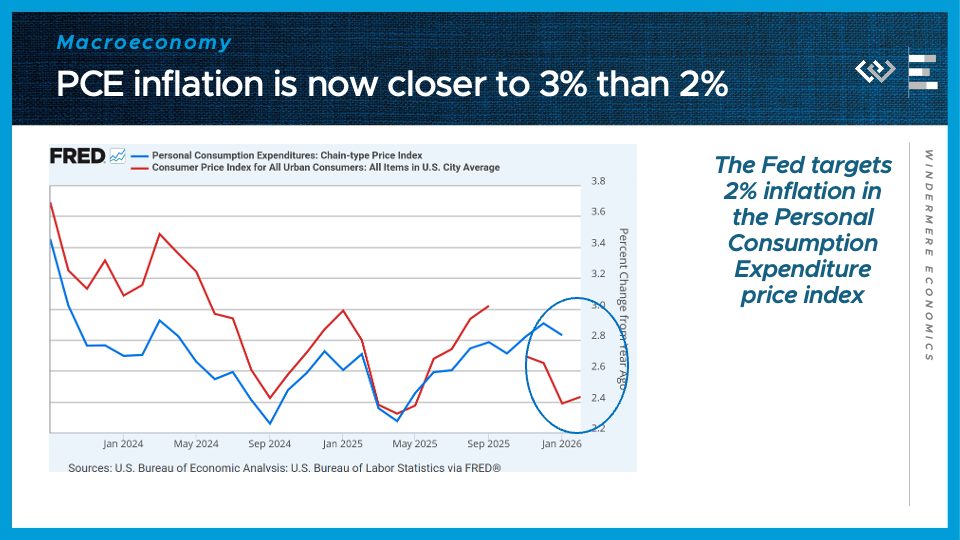
The first news this week is that the Federal Reserve did not cut interest rates at their meeting on March 18. Moreover, at the press conference following their meeting, Jerome Powell said they would not resume cutting interest rates this year until they saw some progress on inflation coming down further. For some insight into WHY that happened, our first number to know this week is 3%: that is where the Fed’s preferred inflation index has been heading in recent months. The Personal Consumption Expenditures price index normally runs a little cooler than the more well-known CPI inflation rate, and so the recent data showing the PCE inflation rate climbing toward 3% is giving the Fed even more of a reason to stop cutting rates than the benign CPI data this winter might have suggested.

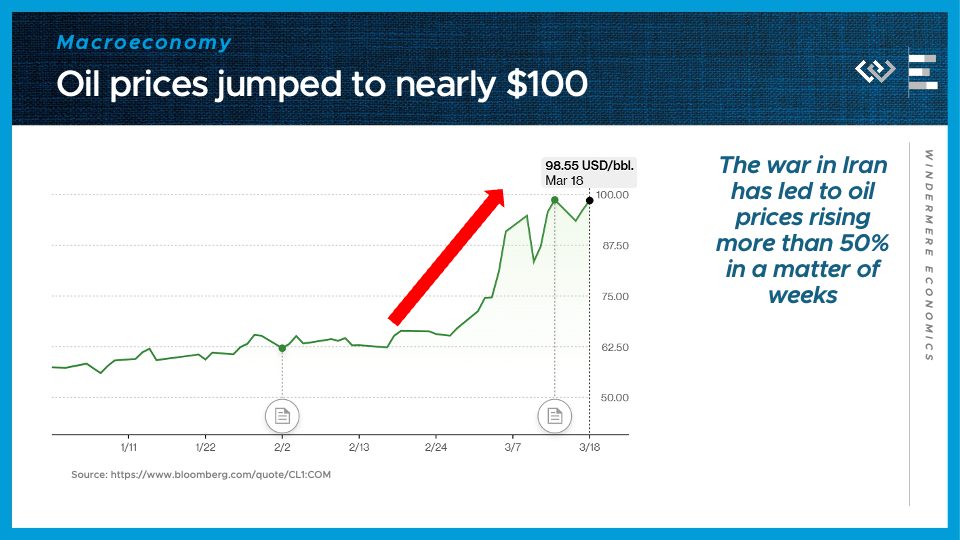
Our second number to know: about $100. That is the ballpark for what a barrel of oil is now costing on major world benchmarks, up more than 50% from prices under $60 just a few short months ago. The culprit, of course, is the war on Iran and the resulting cutoff of most oil normally shipped from the Persian Gulf. This is a volatile, unpredictable situation where the news may change at any time, but for now, the impact is clear: higher costs for almost everything in the economy, as the higher cost of energy ripples out through the economy. That is a major source of concern about inflation this year, which Jerome Powell cited ON TOP OF lingering tariff inflation, as a reason to wait and see before cutting rates any further.

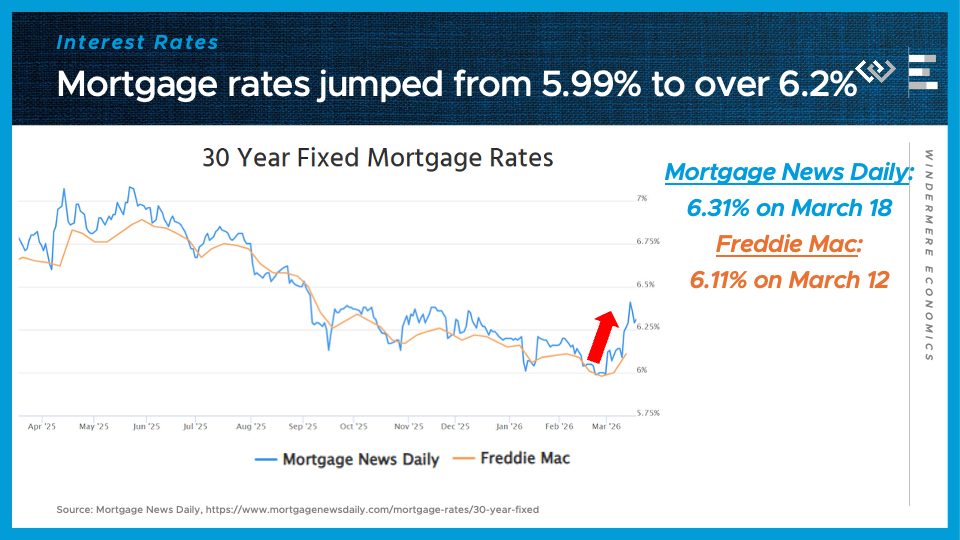
So our third number to know: mortgage rates back closer to 6 and a quarter percent, or higher. At the end of February we hit a major milestone: 30-year mortgage rates dipped below 6% for the first time in 41 months. But all the bad news I just shared about persistent inflation, especially driven by the new oil crisis, has sent mortgage rates soaring back up by a quarter point or more. That will throw a damper on home buying demand this spring, on top of the negative effects from higher gas prices and lower consumer confidence.

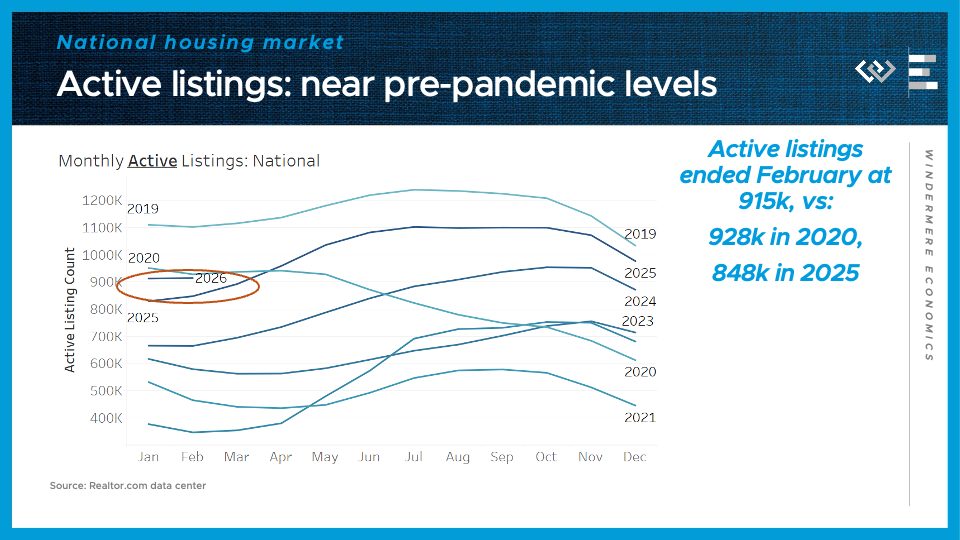
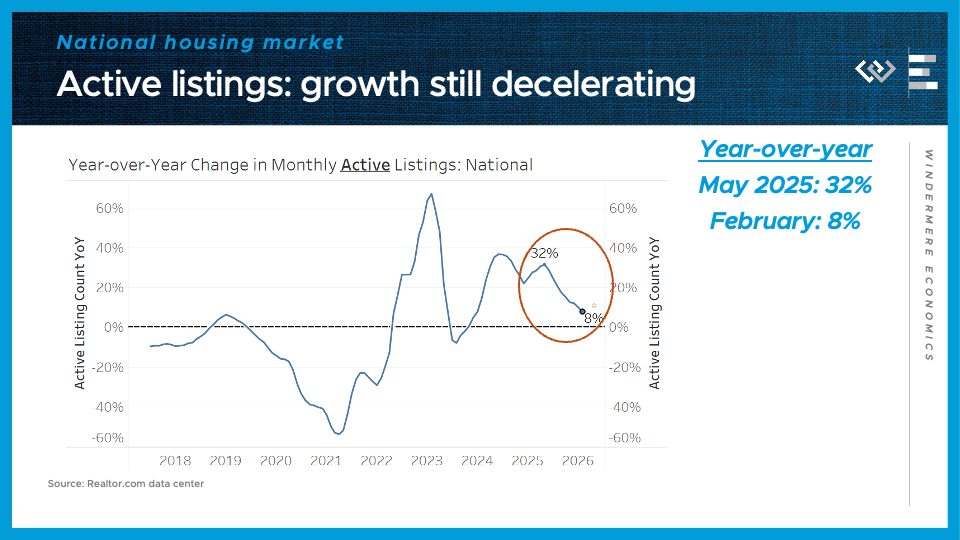
Speaking of the housing market, we saw 928 thousand active listings at the end of February, barely below where inventory stood at this time 6 years ago on the eve of the pandemic, and about 8% more than last year.

That marks yet another month where inventory is up year-over-year, but at a decelerating rate, ever since last May. Putting it all together, that means buyers will have more options in this spring buying season than in any recent year, but they should not expect a glut. The spring selling season always sees fierce competition for competitively-priced listings in desirable locations, so buyers should be prepared to move decisively if they see their dream homes, while sellers should do whatever they can to make their homes stand out amid the tide of other listings.

Top Home Design Trends to Know in 2026

Design trends have always reflected more than style. They reflect how people want to live. And as we move into 2026, home design continues to shift away from one-size-fits-all aesthetics and toward spaces that feel intentional, expressive, and more personal.

After several years shaped by minimalism, fast trends, and highly curated interiors, homeowners are now prioritizing warmth, character, and longevity, creating environments that support everyday life.  That shift is reflected across design forecasts, color reports, and industry insights, where a few defining themes continue to show up. These are the top interior design trends shaping homes in 2026 and how they translate into real, livable spaces.

Lived-In, Layered Interiors

In recent years, many interiors have leaned towards polished, photo-ready spaces that always look perfect. In 2026, that approach continues to soften, and perfection takes a back seat to personality.

Layered, collected interiors are leading the way. Spaces that look as though they have come together over time feel warmer and more inviting. Mixing vintage with new pieces, displaying meaningful objects, and creating soft structure through books, art, textiles, and ceramics adds depth and story. A worn wood table, a reupholstered vintage chair, or a gallery wall that grows naturally gives a home character that can’t be replaced overnight.

Rich, Grounding Color Palettes

Color continues to shape how a home feels, and 2026 paint color trends lean into depth with a calming edge. Think nature-inspire tones like smoky blues, warm browns, muted reds, and softened neutrals that ground a room without feeling heavy.

Behr’s 2026 Color of the Year, Hidden Gem, fits beautifully into this direction. It’s a smoky green-blue that feels rich yet refined, perfect for homeowners who want a space that’s serene yet still has presence. Similar color stories are appearing across other forecasts too, from patina-inspired blues, greens, and browns to warm khakis and layered whites.

Color Drenching and Moody Rooms

If you’re seeing more immersive, saturated rooms online, that’s no accident. Color drenching, which uses a single hue across walls, trims, and sometimes ceilings, continues to rise as one of the standout interior design trends in 2026. When done thoughtfully, it creates a cocoon-like effect that feels polished, intimate, and cohesive.

This is also part of a broader shift toward moodier spaces. Deeper greens, tobacco-inspired browns, warm blacks, and earth reds are showing up in dining rooms, powder baths, offices, and libraries. The key is balance—pairing saturated color with warm wood, soft lighting, and texture to keep the room inviting.

Warm Woods and Character Grain

Wood is making a confident return in 2026, but not in a shiny, match-everything way. Interiors now favor deeper stains, visible grain, and pieces with real character. Reclaimed materials, vintage finds, and finishes that show variation all add warmth and depth.

This shows up in kitchens, furniture, and architectural details like beams, built-ins, and trim. If you’re bringing wood into your home, Minwax’s 2026 Stain Color of the Year, Special Walnut, fits the mood: a warm, versatile brown that enhances natural grain and works across styles from modern to traditional.

Paired with stone, linen, and even metal, wood brings warmth and timelessness—two qualities today’s buyers tend to notice immediately when they walk into a home.

Texture as the New Luxury

Another defining shift in home décor trends for 2026 is the return of texture, especially tactile, handcrafted, and visually soft elements. Textile wall hangings, tapestries, layered rugs, and subtle decorative trims like fringe and tassels are making an easy way to add depth without clutter. You don’t need to go maximal to make it work. A fabric panel hung like art, a woven wall piece, or even vintage textiles repurposed as décor can make a space feel warmer and more grounded. In a world that often feels overly digital, texture brings a human, lived-in quality that’s hard to fake.

Function Forward Design

Function continues to shape design decisions in 2026. Modular furniture, flexible layouts, and thoughtful storage solutions are becoming more prevalent as homes are expected to support multiple roles. Benches with hidden storage, ottomans that double as work surfaces, and adaptable seating arrangements allow spaces to shift easily between hosting, working, and relaxing.

Sustainability as the Standard

Sustainability is no longer a niche consideration. In 2026, it’s an expectation. It shows up in material choices, sourcing, and the lifespan of the pieces we bring into our homes. Homeowners are paying close attention to upgrades that support energy efficiency and long-term livability.

At the same time, thrifting and buying secondhand continue to grow across age groups, driven by both environmental awareness and the search for higher-quality materials. Vintage and antique furniture often offers better craftsmanship and longevity than mass-produced alternatives, while adding instant character to a space.

Whether you’re updating a room or thinking about your next move, these trends offer a thoughtful lens for creating a home that feels both current and enduring.

Refinance or Sell? Making the Right Move for Your Home

Homeownership isn’t a one-size-fits-all, and neither are the financial decisions that come with it. At some point, many homeowners reach a familiar fork in the road: Should I refinance my mortgage, or is it time to sell?

The right answer depends on a mix of factors, including your financial health, today’s interest rate environment, your home’s equity, and where you see yourself and your household in the next few years. Let’s walk through both options so you can decide what makes the most sense for you, not just on paper, but in real life.

Refinancing vs. Selling

If your current mortgage no longer feels like the right fit, you generally have two paths forward: refinancing or selling. Refinancing your home allows you to renegotiate the terms of your existing loan, potentially changing your interest rate, loan term, or monthly payment. Selling, on the other hand, can free up equity and open the door to your next chapter. So, how do you decide between the two? The key is to understand what each one offers and what it requires so you can move forward with confidence.

Refinancing Your Home

There are a few reasons homeowners typically refinance their mortgages, the most common being falling interest rates. Lower interest rates after a mortgage reassessment translate into lower monthly payments and significant savings over the life of the loan. If your finances have improved since you initially secured your mortgage—for example, your debt-to-income ratio has improved, or you’ve bumped up your credit score—you may be able to lock in a better rate with your lender. Refinancing your home could also put cash in your pocket. “Cash-out refinancing” allows you to accept a mortgage for more than your principal balance and use the extra money at your discretion. Typically, homeowners will use such funds for significant expenses, such as a major renovation or home improvement project.

Homeowners with Adjustable-Rate Mortgages (ARMs) often refinance into a Fixed-Rate Mortgage to lock in a stable rate for the remainder of the loan term.

Refinancing can also change the length of your loan. Moving from a 30-year mortgage to a 15-year term may reduce the total interest you pay over time, while extending a loan term can lower monthly payments if cash flow is a concern. As with most financial decisions, it’s about balance and knowing the tradeoffs.

Keep in mind that refinancing your home involves getting a new mortgage, so you’ll have to go through the qualification process again. Assess your financial health and equity before you apply. Once you’re ready to move forward, your Windermere agent can recommend a few trusted lenders or mortgage brokers to provide you with a quote.

Selling Your Home

Selling your home is a bigger shift—but sometimes it’s the right one. If your home no longer fits your lifestyle, or if you’re sitting on significant equity, selling can provide financial flexibility to move forward on your terms. Your agent will start by conducting a Comparative Market Analysis (CMA) to determine your home’s value, taking into account current market conditions, location, seasonality, and your home’s unique features.

Although you stand to receive a lump-sum cash payment, selling your home comes with its own set of costs. Paying for repairs, home inspections, staging expenses, agent commissions, not to mention buying or renting your next home, as well as moving fees. This can add up, so it’s important to budget appropriately. Selling your home also means you’ll be uprooting the life you and your household have established there, so it’s necessary to have a plan for your next steps before the “For Sale” sign goes in the ground.

Six Predictions for 2026

The following is a summary of Windermere Principal Economist Jeff Tucker’s six predictions for the U.S. housing market and economy in 2026. He goes into more detail about his predictions in the video below.

1. Existing Home Sales Will Pick Up (Barely)

Home sales have hovered near generational lows for three years. While a sharp rebound is unlikely, conditions point to a modest uptick in 2026. Inventory levels are higher than they’ve been since 2019, and mortgage rates are lower than they’ve been since 2022. Together, those factors should lift existing home sales—but not by much.

2. Home Prices Will Be Roughly Flat

Home prices are likely to remain flat in 2026, largely due to higher inventory putting downward pressure on values. The Case-Shiller Home Price Index showed small declines last summer, though that trend faded by fall. Sellers have been highly responsive to market shifts, often de-listing when offers fall short or holding off on listing altogether. That restraint has kept prices from falling further despite growing supply

3. Inventory Will Climb to Pre-Pandemic Levels

The number of homes for sale will likely return to pre-pandemic levels in 2026, possibly as early as spring. Inventory rose sharply in 2025, and a “shadow supply” of homes—those whose owners are waiting for better conditions—remains in the wings. Many “discretionary sellers” will continue testing the market, holding out for the right price. That behavior should extend average time on market and boost total listings, giving buyers more options and negotiating power.

4. The Homeownership Rate Will Decline

At current prices and interest rates, homeownership remains out of reach for many middle-class Americans who would have bought in different conditions. Slower rent growth has also reduced urgency among would-be buyers, encouraging them to stay put. More renters are opting for single-family homes to enjoy the space and lifestyle of ownership without a mortgage, a shift that will help push the overall homeownership rate slightly lower.

5. Mortgage Rates Will Decline Slightly

Mortgage rates should remain below 6.25% for most of 2026 and could briefly dip under 6%. The Fed’s rate cuts and slower growth have brought 10-year Treasury yields near 4%, while the spread between Treasuries and mortgage rates has narrowed toward its normal range of 2% or less. That trend is expected to continue as refinance risk on mortgage-backed securities gradually fades, but much of the improvement is already reflected in current rates, so significant declines are unlikely.

6. We Will Avoid a Recession in 2026

The U.S. economy weathered several shocks in 2025 but avoided a downturn. Payroll gains have slowed, though more due to shrinking labor supply than weak demand, and unemployment claims have remained stable. After early trade policy turbulence, corporate earnings rebounded strongly, and tariff concerns have faded as court challenges and new trade deals rolled back some of the costliest restrictions.

Strategic Investments to Increase Home Value and Market Appeal

When it’s time to sell your home, one of the biggest questions is how to make it as appealing as possible to today’s buyers. While market conditions, location, and timing all play a role, the updates you choose before listing can make a meaningful difference in both your selling price and how quickly your home goes under contract. The key is knowing where to invest your time and money. Not every project pays off, but some smart upgrades can give your home a competitive edge, help it stand out in online listings, and create the kind of first impression that gets buyers excited.

Here are some of the most impactful ways to invest in your home before putting it on the market.

Fresh Paint and a Neutral Palette

Few improvements have a more substantial return on investment than paint. A fresh coat instantly refreshes a space, making it feel clean, updated, and well-maintained. Neutral tones for interiors, such as soft grays, light beige, and crisp whites, appeal to the broadest audience and allows buyers to envision their own style in the home. It’s crucial not to overlook trim, doors, and even ceilings, as these small details help create a polished, move-in-ready feel. And if your front door could use a pop of personality, consider a bold, welcoming color that complements the rest of the exterior.

Curb Appeal That Counts

Buyers often form an impression before they even step inside. Landscaping, exterior lighting, and simple maintenance go a long way toward making your home inviting. Think trimmed hedges, fresh mulch, pressure-washed walkways, and a tidy lawn. It’s also smart to ensure outdoor areas are safe, from repairing uneven paths to addressing any obvious hazards.

Adding planters with seasonal flowers, updating house numbers, or swapping out an old mailbox can elevate your home’s appearance without requiring a significant investment. For buyers scrolling through listings, that curbside charm can be a deciding factor that gets them to schedule a showing.

Kitchen and Bathroom Touch-Ups

Kitchens and bathrooms continue to be high priorities for buyers, but you don’t need to take on a full remodel to make an impact. Small upgrades like replacing outdated cabinet hardware, installing new light fixtures, or swapping in modern faucets can transform the look of these spaces.

In the kitchen, consider updating your backsplash with a clean, timeless tile or refreshing worn countertops with a durable surface. In bathrooms, regrouting tile, caulking any cracks, replacing mirrors, or updating vanities are simple ways to modernize without overspending.

Flooring Matters

Floors are often one of the first things buyers notice when touring a home. If your carpets are worn or stained, professional cleaning or even replacement can make a big difference. Hardwood floors are especially appealing and refinishing them is often more cost-effective than replacing them.

For areas where replacement makes the most sense, consider durable and stylish options like engineered wood or luxury vinyl plank. Consistent flooring throughout the main living areas can also help a home feel more spacious and cohesive.

Energy-Efficient Features

Today’s buyers are increasingly focused on efficiency and sustainability. Investments like LED lighting, programmable thermostats, and updated appliances not only lower utility bills but also signal to buyers that the home is modern and thoughtfully maintained.

If your budget allows, new windows or improved insulation can add value while appealing to environmentally conscious buyers. Highlighting these upgrades in your listing helps showcase both comfort and cost savings.

Decluttering and Staging

Sometimes the most impactful upgrade isn’t about new finishes, it’s about presentation. Decluttering each room, minimizing personal items, and rearranging furniture to optimize space can dramatically change how buyers perceive your home. And the best part? It’s completely free.

Professional staging takes this one step further, creating a warm and welcoming atmosphere that helps buyers envision living in the space. Even small touches, like fresh flowers, cozy throws, and well-placed artwork, can make your home feel more stylish, comfortable, and truly move-in ready.

Making Smart Choices

The goal of any pre-sale investment is to spend strategically, choosing projects that increase appeal without overextending your budget.

At Windermere, our agents are experts at helping sellers decide which upgrades matter most. From recommending paint colors to connecting you with trusted contractors, we’re here to make sure you get the best return on your investment. Through our Windermere Ready program, we can even front the cost of improvements like painting, landscaping, cleaning, and staging so your home shines its brightest when it hits the market. With concierge-level service and no payments due until closing, it’s a simple way to maximize your home’s value and sell faster.

What is a Buyer-Agency Agreement and Why Does it Matter?

In today’s evolving real estate landscape, one of the biggest changes buyers will encounter is the relatively new requirement to sign a Buyer Agency Agreement. While this added step may sound formal, it’s actually designed to make the home-buying process more transparent, secure, and ultimately more beneficial for everyone involved.

What is a Buyer-Agency Agreement?

At its core, a Buyer Agency Agreement is a written contract between you and your real estate agent. It outlines your working relationship, defining the agent’s responsibilities, the services they’ll provide, the duration of your partnership, and how their compensation will be handled. Think of it as the roadmap for your home-buying journey, ensuring everyone starts on the same page, with mutual understanding and trust.

Starting in mid-2024, the National Association of REALTORS® (NAR) began requiring agents to have a signed buyer agency agreement before showing homes to clients.  This change stems from a nationwide settlement designed to bring greater transparency and accountability to real estate transactions by ensuring all agent-buyer relationships are clearly defined in writing. In some markets, this requirement isn’t new; states like Washington, Idaho, and Utah have long recognized the importance of formalizing this relationship. But for many buyers, this will be their first time signing such an agreement, and understanding its purpose can make all the difference.

So, why does it matter?

Transparency and Trust

This agreement ensures clarity around both compensation and representation. It spells out how your agent is paid—whether by the seller, by the buyer, or by both—so there are no surprises later. With these details defined upfront, you can move forward with confidence, knowing your agent’s focus is squarely on your best interests.

Defined Roles and Responsibilities

A Buyer Agency Agreement clearly outlines what your agent will do for you: from helping you navigate listings and compare neighborhoods to guiding you through offers, inspections, and closing. It also defines your responsibilities as a buyer, such as communicating openly and working exclusively with your chosen agent throughout the duration of the agreement. Together, these expectations create a smoother, more collaborative experience.

Protection and Professionalism

Buying a home is one of life’s biggest investments, and having a written agreement in place protects both you and your agent by setting clear parameters for your working relationship. It ensures your agent is committed to advocating for your needs, maintaining confidentiality, and acting in your best interest throughout the process.

While some may see the Buyer Agency Agreement as an extra step, it’s really a safeguard, one that reinforces the professionalism and dedication that define Windermere Real Estate agents. It turns a handshake of trust into a documented commitment, empowering buyers to make confident, informed decisions at every stage of the journey.

Why AI Can’t Replace Your Real Estate Agent

Technology is transforming nearly every industry, and real estate is no exception. New tools and innovations are reshaping the way we search for, buy, and sell homes. Among these advances, artificial intelligence (AI) has quickly become one of the most talked-about technologies, being used for everything from writing and research to customer service. Naturally, this raises the question of whether it could ever replace jobs that rely on human connection and expertise, like real estate.

In the sections ahead, we’ll break down what AI can and can’t do in real estate, and how agents can use it to their advantage rather than view it as competition.

What is AI?

Artificial intelligence (AI) is technology that allows machines to simulate human intelligence. In recent years, AI has grown at lightning speed and has become part of daily life, often in ways people don’t even notice. Generative AI tools like ChatGPT, Copilot, Gemini, etc., are the ones most people hear about because they can answer questions, draft text, or create images. At the same time, other forms of AI are working quietly behind the scenes on websites, apps, and services we use daily, from recommendation engines to fraud detection.

Together, these tools are changing how we interact with technology, making it faster and more efficient. But when it comes to buying or selling a home, no algorithm can replace the insight, guidance, and personal care of a trusted real estate agent.

How AI is Shaping Real Estate

AI is already influencing how buyers and sellers approach the market. From predictive pricing tools and market analysis platforms to more intelligent home search engines, AI can process large amounts of data and provide insights more quickly than any individual could manage on their own. For agents, it can automate repetitive tasks like drafting emails or creating basic listing descriptions, while chatbots help answer simple client questions around the clock. Some platforms even use AI to match buyers with properties based on preferences or past behaviors. These tools save time and make processes more productive, but they’re only part of the real estate experience.

Why Real Estate Needs a Human Touch

Buying or selling a home is never just about the transaction—it’s often one of the biggest financial and emotional decisions of a person’s life. And while AI may provide quick data or market insights, it can’t sit down with an individual and understand their specific needs, calm their nerves during a stressful moment, or celebrate when the keys are finally handed over.

A real estate agent listens, adapts, and advocates for their clients in ways that no algorithm can replicate, bringing empathy, intuition, and lived experience into the equation rather than just facts and figures. They know the neighborhoods, the schools, and the subtle details that make a house a home. They can recognize when a client needs reassurance, when to negotiate a little harder, and when to suggest a creative solution to keep a deal moving forward. These instincts and skill sets are built on years of human connection, which is what makes the difference between simply completing a deal and guiding someone through a life-changing experience or helping them reach their real estate goals.

The Future: Agents + AI, Not Agents vs. AI

Rather than replacing real estate agents, AI has the potential to make their work even more impactful. Tools like virtual tours, AI-powered staging, and digital imaging can help buyers visualize a property in new ways, while automation can create marketing materials, streamline scheduling, and analyze market trends at an increased speed. These efficiencies free up time and energy for agents to focus on what matters most: listening to clients, building trust, and guiding them through one of life’s most significant decisions.

When used thoughtfully, AI shouldn’t be viewed as a competition, but as a business companion. By blending cutting-edge technology with the irreplaceable human touch, real estate agents can continue to grow their business, deliver better service, and strengthen the personal relationships that remain at the heart of every successful transaction.